A neuroscientist has revealed what Charlie Kirk went through in the final moments of his life — and whether he even realized he had been fatally shot.
”A novice would know how”
The murder of Charlie Kirk has left a deep impact on many Americans, and the case continues to raise numerous questions —most notably, the motive behind the attack.
In broad daylight, 31-year-old conservative activist Charlie Kirk was debating at a Turning Point USA event at Utah Valley University (UVU) on Wednesday, September 10, when a single bullet struck his neck.
Security footage captured the shocking moment: Kirk collapsed in his chair, blood pouring from the wound. He was rushed to the hospital, but shortly afterward, President Donald Trump announced his death.
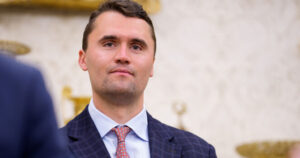
Footage of the incident, along with the suspect escaping the scene, was blasted on TV and across the internet. Investigators now believe Kirk was shot with a .30-06 caliber Mauser Model 98, fitted with a mounted scope, which they later found wrapped in a dark towel near the site of the shooting.
Firearms experts have stated that shooting Kirk from 150 yards away with a bolt-action rifle from an elevated position was relatively straightforward and did not require specialized training.
“It was a simple shot,” said Charles Stephenson, a former FBI-SWAT firearms instructor. ”A novice would know how.”
Was Charlie Kirk aware of what happened?
Stephenson also suggested that the shooter may not have been aiming specifically at Kirk’s neck, as the bullet’s trajectory shifted during its flight.
”He (the shooter) was probably aiming for his head and hit him in the neck,” Stephenson explained.
But was Charlie Kirk aware of what happened the moment he was shot?
Derek Van Schaik, a neuropsychologist with 650,000 followers on took to YouTube to shed light on how Charlie Kirk reacted to the shots, explaining why the activist likely had no awareness of the attack.
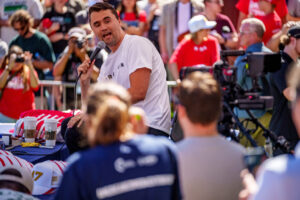
“When someone suffers a catastrophic wound to the neck that destroys a carotid artery and jugular vein, the mind only has a fleeting window to possibly register what happened,” Van Schaik said.
“However, in Charlie’s case, and after analyzing the footage with a digital timer, he was conscious for no more than four tenths of a second after impact. Far too fast for his brain to even register what had happened to him.”
Neck pain can register in just 100 milliseconds
The neuroscientist described the experience as if it “never happened.”
“No panic, no dread, no realization that he was about to die, only an abrupt blackout. It was neurologically impossible for him to psychologically realize anything was wrong at all.”
While neck pain can register in just 100 milliseconds, Van Schaik explained that Kirk blacked out too quickly for his brain to transform the signal into a perception of pain. “He absolutely did not know he was shot, and he psychologically was unable to even register that anything catastrophic ever happened,” he concluded.
Shocking footage showed Kirk raising his arms toward his neck before collapsing — a detail that left many viewers questioning what was happening.
“Many have speculated his arms moving upward towards his chest is due to a phenomenon known in forensic science as decorticate posturing,” Van Schaik said. “However, that’s unlikely.”
He explained that decorticate posturing occurs when “higher brain areas like the cerebral hemispheres are badly damaged, cutting off voluntary motor control,” which did not appear to be the case here.
“An immediate loss of blood to the brain does not typically result in immediate decorticate posturing,” Van Schaik added. “Instead, loss of blood to the brain would have led to rapid unconsciousness and flaccid collapse.”
DNA has been matched
He concluded: “Therefore, his arms instantly moving up like that after being hit was apparently due to an instant involuntary defensive reflex.” The reaction, he explained, was similar to the instinctive motion a person makes when startled, jerking their arms up to protect the head and body.
The FBI had initially offered a $100,000 reward for information leading to Robinson’s arrest, later boosted by pledges from Trump advisor Alex Bruesewitz, conservative activist Robby Starbuck, and billionaire Bill Ackman. The total quickly rose to $1.15 million, later reported as $1.2 million.
Tyler Robinson, 22, was taken into custody on Sept. 11 for assassinating the conservative activist. He was reportedly arrested after having been convinced by his father to turn himself in.
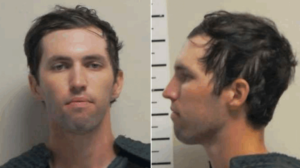
According to FBI Director Kash Patel, Robinson’s DNA has been matched to a screwdriver recovered from the rooftop, along with a towel wrapped around the rifle believed to have been used to fatally shoot Kirk.
“I can report today that the DNA hits from the towel that was wrapped around the firearm and the DNA on the screwdriver are positively processed for the suspect in custody,” Patel said in a Sept. 15 interview with Fox & Friends, confirming the DNA analysis directly links Robinson to both items found at the scene.
Robinson has not publicly commented on the charges, and investigators have yet to identify a definitive motive. However, Patel revealed that the FBI has interviewed Robinson’s live-in partner, who Gov. Cox described as transitioning from male to female.
While the relationship has been acknowledged by officials, officials cautioned against speculation regarding motive, urging the public not to draw premature conclusions.
The reward
Questions have also emerged over whether Robinson’s family could claim the reward. Ackman addressed the issue directly on X:
“A number of people have reached out and/or posted expressing concern that Tyler Robinson’s father may collect a $1.2m reward for turning in his son, which inspires a few thoughts.”
He added: “First, in order for rewards to be effective in finding criminals, the rewards need to be paid even if the recipient is a crook or worse. That said, in this case, if Tyler’s father is found to have been involved or otherwise acted negligently in contributing to Charlie’s death, civil litigation or criminal prosecution will reverse any unjust compensation.”
Ackman later noted that Robinson’s family reportedly planned to waive any claim to the money. “So yes, we will pay the reward if it is earned to whomever the FBI indicates provided the information that led to Tyler’s arrest. I always keep my word.”
Police reports, however, suggest Robinson’s father may not have been the one to alert authorities. According to investigators:
“On the evening of September 11, 2025, a family member of Tyler Robinson reached out to a family friend, who contacted the Washington County Sheriff’s Office with information that Robinson had confessed to them or implied that he had committed the incident. This information was relayed to the Utah County Sheriff’s Office and scene investigators at UVU [Utah Valley University]. This information was also conveyed to the FBI.”